
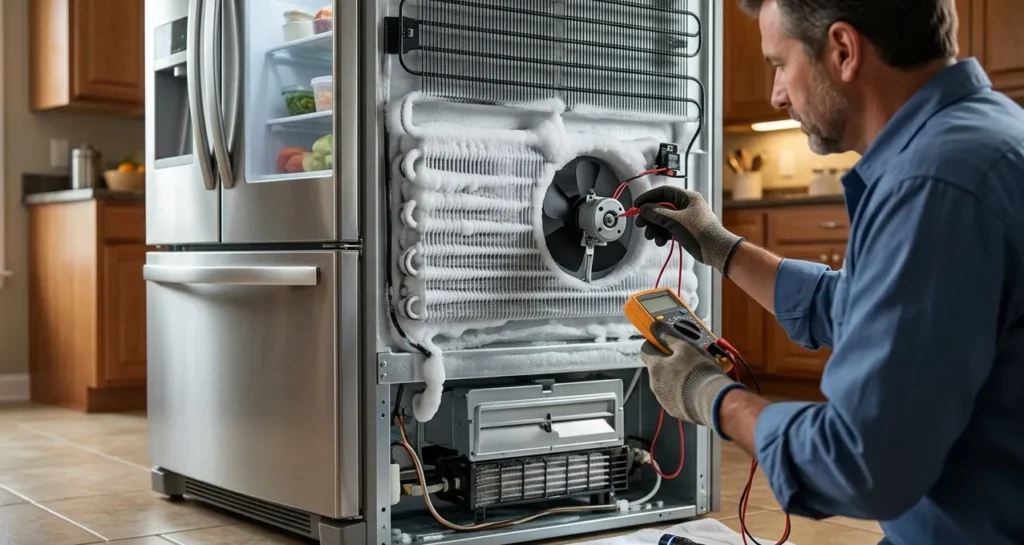
If your refrigerator is not cooling but the freezer works fine, the most common culprit is a blocked or broken evaporator fan that stops cold air from circulating into the fridge compartment. Other frequent causes include frosted-over evaporator coils, a faulty damper control assembly, dirty condenser coils, a broken thermistor, or a malfunctioning defrost system. Most of these issues can be diagnosed at home, and many are fixable without calling a technician right away.
Why Your Freezer Works But Your Fridge Does Not
It sounds contradictory, how can one part of the same appliance be ice cold while the other sits at room temperature? The answer lies in how modern refrigerators actually work.
Your fridge and freezer share a single cooling system. The compressor pushes refrigerant through a loop that includes the evaporator coils, which absorb heat from inside the appliance. The evaporator fan then blows that cold air through internal vents into both compartments. The freezer gets cold air directly, while the refrigerator section depends on a controlled transfer of that cold air through a small opening called the damper or air diffuser.
For a closer look at how this air path works and how to troubleshoot each component, see this detailed guide on why a refrigerator is not cooling while the freezer works.
When something disrupts that transfer, whether it is a broken fan, a frozen coil, a stuck damper, or a clogged vent, the freezer keeps humming along just fine, but the refrigerator compartment warms up. This is one of the more deceptive appliance problems because everything seems to be running, yet your milk is going bad.
The Most Common Reasons a Fridge Stops Cooling While the Freezer Still Works
1. Blocked or Broken Evaporator Fan
This is the single most common reason for this exact symptom. The evaporator fan pulls cold air into the evaporator coils, which is then distributed through the fridge and freezer. If the fan is not working, this does not happen efficiently. The freezer may still feel cold because it sits close to the coils, but the refrigerator compartment gets no airflow and warms up quickly. In many cases, this issue is best handled through professional Fridge Repair Services Fargo to ensure proper diagnosis and long-term repair.
To check this, open the freezer and listen. A working evaporator fan should produce a steady hum. If you hear nothing, or if the fan sounds like it is struggling or grinding, the motor is likely the problem. Replacing a faulty evaporator fan motor will cost between $100 and $150 to install, which is significantly less expensive than replacing your refrigerator.
2. Frosted or Iced-Over Evaporator Coils
The evaporator coils are where the air goes to cool down. If the coils are covered in frost, the air cannot pass through efficiently and will not get adequately cool, resulting in a freezer working but the fridge not cooling.
You can often confirm this by removing the back panel inside the freezer. If you see a thick block of ice covering the coils rather than a light frost, that is your problem. If the fridge is not cooling but the freezer works and the latter compartment is heavily frosted over, unplug the fridge and defrost the freezer. Once it melts, plug the fridge back in and allow it to cool properly. If the problem returns within a few days, the root cause is a failing defrost system that needs attention.
3. Malfunctioning Defrost System
Modern frost-free refrigerators run automatic defrost cycles several times a day using a defrost heater, a defrost thermostat, and a defrost timer or control board. If the defrost heater is faulty, ice will accumulate and block airflow. This is one of the more common root causes behind the freezer-works-but-fridge-does-not scenario, particularly in refrigerators that are five years old or older. A technician can test each component of the defrost circuit individually using a multimeter to pinpoint which part has failed.
4. Dirty Condenser Coils
Dirty condenser coils are a very common issue behind a working freezer but a warm fridge. The condenser coils are directly responsible for the movement of warm air out of your fridge and cool air into it, and they can malfunction or stop working entirely if they get dirty. The coils are located on the back of the fridge right near the ground, so dust, dirt, and pet hair can accumulate on them and cause issues.
This is one of the easiest problems to fix yourself. Pull the refrigerator away from the wall, locate the coils, and clean them thoroughly with a vacuum and a coil brush. Clean dust off condenser coils and the fan with a stiff brush and vacuum, working carefully to avoid bending or damaging the tubes. Many appliance professionals recommend doing this every six to twelve months, especially in homes with pets.
5. Faulty Damper Control Assembly
The damper control assembly controls how much cold air passes from the freezer into the fridge. It is a small mechanical flap between the two compartments that opens and closes automatically. If it gets stuck in the closed position due to ice buildup, mechanical wear, or a failed motor, cold air simply cannot get into the refrigerator no matter how well the rest of the system works.
The cost of a replacement damper control assembly varies depending on the brand and model but typically ranges from $50 to $150. Brands like GE, Whirlpool, Frigidaire, Samsung, and LG all use slightly different designs, so always verify the part number against your refrigerator’s model number before ordering.
6. Faulty Thermistor
The thermistor monitors the internal temperature of your refrigerator and any fluctuations that occur. When it detects the interior is below the preset temperature, it signals the compressor to activate and start cooling. If the thermistor is not working, the appliance has no way to monitor its own temperature, so the evaporator coils and fan may never switch on.
A simple way to test whether the thermistor might be at fault is to lower the temperature setting by two degrees and wait a few minutes. The thermistor resistance should change in conjunction with the temperature of the refrigerator. If the resistance does not change or does not have continuity, the thermistor may need to be replaced.
7. Blocked Air Vents Inside the Refrigerator
When your refrigerator is not cold but the freezer works, this can be because of a blocked air vent. If the vents that connect them are blocked by frozen veggies or a box of popsicles, the cold air will not reach your fridge properly. This one gets overlooked because people focus immediately on mechanical problems, but it is worth ruling out first.
Check the vents at the back wall of your refrigerator, usually near the top or on the ceiling depending on your model. Reorganize the contents so nothing is touching the vents, and give it a few hours to see if the temperature drops.
8. Incorrect Temperature Settings
With so many newer refrigerators having temperature control on the outside, it is very possible that the temperature was accidentally changed. Checking the fridge’s temperature is an important first step in diagnosing why the fridge is not cold but the freezer is, and can ultimately save you time and money.
According to the FDA, a refrigerator’s ideal temperature should be set to 40°F or lower, while the temperature of a freezer should be at 0°F. Adjust the refrigerator to somewhere between 35 and 38 degrees Fahrenheit and give it several hours to stabilize before concluding there is a mechanical problem.
9. Worn or Damaged Door Gaskets
Replacing an old, damaged gasket can be a key solution to fixing a refrigerator that is not cooling properly. When gaskets become worn, cracked, or no longer seal tightly, the refrigerator has to work harder to maintain a cold temperature, leading to cooling issues.
Test your door gasket by closing the door on a piece of paper. If you can pull the paper out easily without any resistance, the seal is not tight enough and needs to be replaced. Door gasket replacement is a DIY-friendly repair on most refrigerator models.
10. Overstuffed Refrigerator
If your refrigerator is not cooling, it may be because food items are blocking the vents of the fridge and freezer compartments. Overstuffing your fridge with food can cause items to block the vents and prevent the cool air from circulating properly. The freezer, which operates on a more direct cooling method, is unaffected and stays cold even as the fridge warms up.
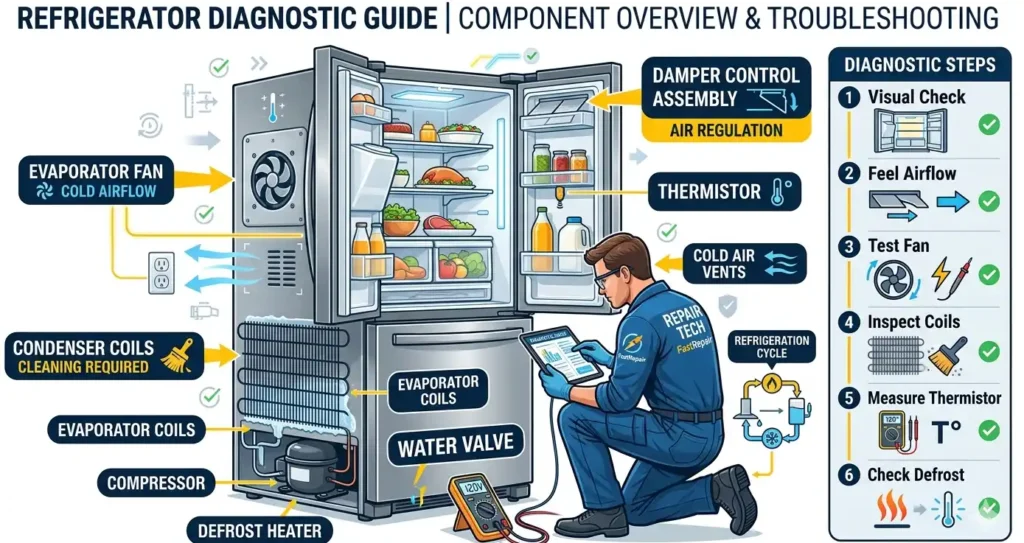
How to Diagnose the Problem Step by Step
Before spending money on a service call, work through these checks in order from easiest to most involved.
Step 1: Verify the temperature settings on both the freezer and refrigerator. Make sure neither was accidentally changed.
Step 2: Check that the refrigerator is not overloaded and that no items are pressing against or blocking the interior air vents.
Step 3: Inspect the door gasket for visible cracks, tears, or areas that no longer create a firm seal. Do the paper test described above.
Step 4: Pull the refrigerator away from the wall and inspect the condenser coils. If they are visibly dusty or clogged with pet hair, clean them with a vacuum and coil brush.
Step 5: Open the freezer and listen for the evaporator fan. If it is not running or sounds labored, the fan or motor may need replacement.
Step 6: Remove the back panel of the freezer compartment (unplug the fridge first) and inspect the evaporator coils. Significant ice buildup signals a defrost system problem.
Step 7: If all of the above check out, the issue likely lies with the damper assembly, thermistor, temperature control board, or compressor, at which point a certified appliance technician is the right call.
When to Call a Professional
Some repairs are genuinely within reach for a handy homeowner. Cleaning condenser coils, reorganizing interior contents, replacing a door gasket, or even swapping out an evaporator fan motor are all manageable DIY tasks with the right parts and a bit of patience.
However, some problems require professional diagnosis. Refrigerant leaks must be handled only by certified technicians because refrigerant is a regulated, hazardous substance. Compressor replacement is expensive and complex enough that it often prompts a conversation about whether the repair cost exceeds the value of an aging appliance. Temperature control board issues and sealed system failures also typically require specialized tools to diagnose correctly.
The average cost for refrigerator repair ranges from $200 to $300, with some repairs climbing higher. As a general rule, if a refrigerator is more than ten years old and facing a major component failure, it is worth comparing the repair cost against the price of a new appliance.
Understanding real-world breakdowns of similar issues can also help you make a better decision before calling a technician. For example, this guide on Why Is My Refrigerator Not Cooling in Salem Oregon explains how cooling problems are diagnosed and what usually causes them in actual service situations.
Fridge Not Cooling? Get Fast & Reliable Repair Services Today
Repair Cost Overview
| Component | Typical Repair Cost |
|---|---|
| Condenser coil cleaning | $0 to $100 (DIY is free) |
| Door gasket replacement | $50 to $150 |
| Damper control assembly | $50 to $200 |
| Evaporator fan motor | $100 to $200 |
| Thermistor replacement | $75 to $150 |
| Defrost heater or timer | $100 to $200 |
| Temperature control board | $150 to $300 |
| Compressor replacement | $300 to $600 or more |
Preventive Maintenance Tips to Avoid This Problem in the Future
Keeping your refrigerator running properly for the long term does not require much effort, but it does require consistency.
Clean the condenser coils at least once a year, and more frequently if you have pets. Inspect the door gaskets every few months and replace them at the first sign of wear. Avoid overstuffing the refrigerator so that air can always circulate freely. Your refrigerator needs at least a half inch of clearance on the sides and one inch in the back in order to work at optimal performance levels. Never place the refrigerator near a heat source such as an oven, dishwasher, or a sunny window, as ambient heat forces the cooling system to work much harder than necessary.
Refrigerators perform best when located inside a home and at around 70°F (21°C). Locations considerably above this temperature, like 90°F (31°C), affect the cooling capacity and the fridge may not cool sufficiently.
Frequently Asked Questions
Why is the freezer cold but the refrigerator is warm?
The most likely cause is a problem with the evaporator fan, a blocked air vent, or a stuck damper assembly that is preventing cold air from reaching the refrigerator compartment. They share a cooling system, so when airflow is disrupted, the freezer stays cold while the fridge warms up.
Can I fix a refrigerator not cooling myself?
Many common causes including dirty condenser coils, blocked vents, incorrect temperature settings, and worn door gaskets are DIY-friendly repairs. More complex issues involving the defrost system, evaporator fan motor, or control board may require a professional technician.
How long can food stay safe in a warm refrigerator?
Perishable food should not be left in a refrigerator above 40 degrees Fahrenheit for more than two hours. According to the U.S. FDA Food Safety Guidelines, perishable food should not be left above 40°F for more than 2 hours. If your fridge has been warm for longer than that, use a cooler with ice to keep food safe while you troubleshoot the problem.
Is it worth repairing an old refrigerator that stopped cooling?
It depends on the age of the appliance and the specific repair. If the refrigerator is under ten years old and the issue is a minor component, repair usually makes sense. For appliances older than ten to fifteen years facing compressor or sealed system failures, replacement is often the more economical long-term choice.
How do I know if my evaporator fan is broken?
Open the freezer and press the door switch, the button the door normally pushes in when closed. The fan should run when that switch is depressed. If you hear nothing, or a grinding or clicking sound, the fan motor is likely failing and needs to be replaced.
Refrigerator Not Cooling? Get Fast & Reliable Fridge Repair Services Fargo Today