
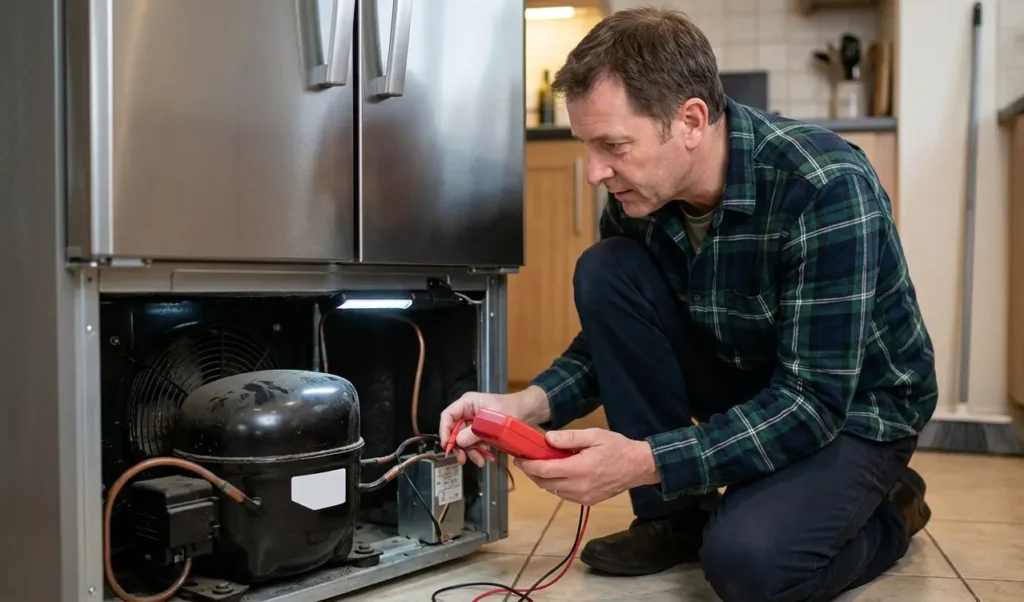
A loud buzzing or humming noise from a refrigerator is almost always caused by one of six components: a failing compressor, a blocked or damaged evaporator fan, a dirty condenser fan, a faulty water inlet valve, a bad compressor start relay, or the unit sitting unevenly on the floor. Most of these problems can be diagnosed at home in under 30 minutes, and several can be fixed without calling a technician.
If your fridge has been humming loudly enough to hear from another room, or buzzing in a rhythmic pattern that keeps you up at night, keep reading. This guide walks you through every possible cause, ranked from the most common to the most serious, along with step-by-step fixes for each one.
Is That Noise Normal or a Warning Sign?
Before assuming something is broken, it helps to know what a healthy refrigerator actually sounds like. Appliances like the Samsung French Door, the Whirlpool Side-by-Side, the LG InstaView, or a basic GE top-freezer all share the same fundamental operating sounds: a soft, rhythmic hum every 15 to 20 minutes as the compressor cycles, a quiet whoosh from the evaporator and condenser fans circulating air, and occasional gurgling as refrigerant moves through the sealed system after the compressor shuts off.
None of those sounds should be loud enough to interrupt a conversation. The moment the hum becomes a drone, the buzz becomes a rattle, or the sound becomes constant rather than cyclical, something needs attention.
A useful rule of thumb: if the noise started recently, grew louder over time, or is accompanied by poor cooling, that combination almost always points to a real problem rather than normal operation.
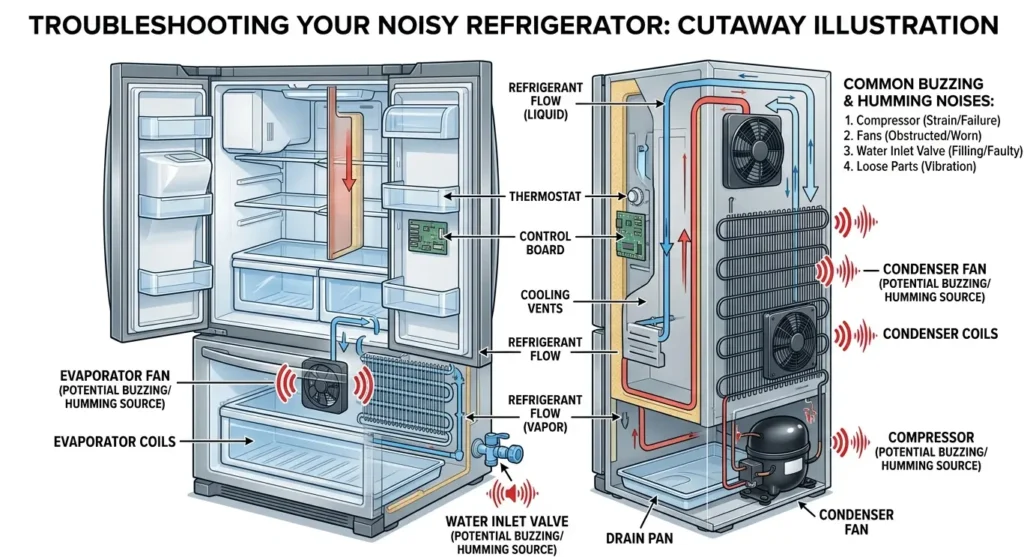
Where Is the Noise Coming From? Use Location to Diagnose Fast
The single fastest way to identify the cause is to pinpoint exactly where the sound originates. Different components live in very specific areas of the appliance, so location narrows your search immediately.
Inside the freezer compartment points almost universally to the evaporator fan. At the bottom rear, the noise typically involves the compressor, condenser fan, or start relay. At the lower right rear corner specifically, the water inlet valve is often to blame, especially with ice maker equipped models.
Noise from the very bottom of the unit usually comes from a loose drain pan vibrating against the frame. Noise from the entire cabinet vibrating typically means the leveling legs are off, causing the heavy metal frame to resonate when the compressor turns on.
Cause 1: Unlevel Refrigerator or Vibration Against Nearby Surfaces
This is the most common and easiest cause to fix. A refrigerator stands on four feet or rollers. If even one of those feet is not touching the floor firmly, the entire heavy metal cabinet will wobble. When the compressor turns on, that slight wobble turns into a harmonic vibration.
The same effect happens when the sides or back of the refrigerator touch a cabinet wall, countertop, or another appliance. Normal operating vibration transfers into the adjacent surface and amplifies significantly.
How to fix it: Use a bubble or carpenter’s level to check if the refrigerator sits evenly on the floor. Adjust the leveling legs at the bottom corners of your refrigerator to ensure the unit is stable and level. This is typically done by rotating the adjustable legs located near the floor. Ensure the fridge is not shaking or wobbling after adjustment. Then pull the fridge a few centimeters away from the wall and neighboring cabinets. Run it for an hour and see if the noise drops.
Cause 2: Evaporator Fan Blocked by Ice or Failing
The evaporator fan sits inside the freezer section, typically behind a rear panel. If the evaporator fan in your refrigerator is blocked by ice, if its airway is blocked by food items, or if its motor is bad and needs replacing, your refrigerator will begin to hum or buzz loudly.
If it is obstructed by excessive frost or ice, it will make a loud humming or buzzing noise as the spinning fan blade hits the ice or frost buildup. You can confirm this component is the culprit by pressing the freezer door light switch while the door is open. To see if the evaporator fan is causing the loud refrigerator racket, simply push in the light switch in the freezer. If this fan is the culprit, the noise will get louder.
How to fix it: Unplug the refrigerator first. Remove the rear panel inside the freezer. Inspect the area around the fan for ice buildup. If frost is present, let the freezer defrost naturally with the doors open for 24 to 48 hours. Once defrosted, spin the fan blade by hand. With the fridge unplugged, spin the fan blade with your hand to see if it’s operating smoothly. Check wires, grommets, and other components for signs of wear and tear. If the fan blade doesn’t move freely or there are other signs of damage or corrosion, it may be necessary to replace the fan and surrounding parts.
If the frost returns within a day or two after defrosting, the automatic defrost system, including the defrost heater, defrost thermostat, and defrost timer or control board, needs separate diagnosis.
Cause 3: Dirty or Obstructed Condenser Fan
The condenser fan is located at the back bottom of the refrigerator, near the compressor. It draws air across the condenser coils to dissipate the heat removed from inside the unit. When it collects dust, pet hair, or debris on its blades, it becomes imbalanced and starts producing a buzzing or rattling sound that vibrates through the entire back panel.
How to fix it: Locate the condenser fan motor. It is located at the back of the fridge near the compressor. Inspect the fan for any signs of wear and tear, and see if you can manually turn the fan around. If the fan cannot turn the whole way around or is damaged in any way, it will need to be replaced.
Vacuum the coils and the fan blades thoroughly using a brush attachment. Once clean, try to spin the condenser fan blade with your fingers. It should spin freely with zero resistance. If it feels stiff, grinds, or squeaks, the motor is failing and needs replacement. A new condenser fan motor costs roughly $50 to $120.
Cause 4: Dirty Condenser Coils Straining the Compressor
The condenser coils release the heat collected from inside the refrigerator into the surrounding kitchen air. When they accumulate a thick layer of dust and grime, heat cannot escape efficiently. Clean condenser coils regularly: vacuum the condenser coils every six months to prevent dust buildup, which strains the compressor and causes it to run louder than intended during normal daily use.
Dirty condenser coils restrict airflow and prevent heat release, forcing the compressor to overwork. Constant operation from this cause can increase the electric bill by 30 to 50 percent.
How to fix it: Unplug the unit. Remove the toe grille at the bottom front, or pull the fridge away from the wall to access rear-mounted coils. Use a long, flexible coil cleaning brush and a vacuum to remove all dust and debris from between the coil fins. Cleaning the coils every six months is considered standard refrigerator maintenance.
Cause 5: Faulty Water Inlet Valve
If your refrigerator has an ice maker or a water dispenser, it has a water inlet valve mounted at the back lower section where the household water supply line connects. When the internal ice maker demands water to fill the tray, the electronic solenoids on this valve forcefully open. If your home water supply wall valve is turned off, the copper line is kinked, or the plastic valve itself is heavily clogged with hard water calcium scale, the dry solenoid will aggressively vibrate and buzz loudly as it desperately tries to pull water that simply is not there.
If you hear a loud buzz for 5 seconds every 15 minutes, that is the water inlet valve trying to open. High water pressure above 80 PSI often creates noticeable buzzing. Mineral deposits inside the valve create turbulence as water flows past them. Hard water accelerates deposit buildup and buzzing.
How to fix it: First confirm the water supply valve behind the refrigerator is fully open. Straighten any kinks in the supply line. If the valve itself is worn or the solenoid coil is damaged, a replacement water inlet valve costs $20 to $60 and involves unplugging the wiring connectors and unscrewing the mounting bracket, which most homeowners can handle without professional help.
Cause 6: Failing Compressor Start Relay
The start relay is a small plastic component that clips onto the side of the compressor. Its job is to provide the electrical boost the compressor motor needs to start each cooling cycle. When this relay fails, rapid, repeated clicking occurs, especially if the compressor is not running between clicks. The pattern, click, brief silence, click, brief silence, is often caused by a failed start relay, which is a small component mounted on the compressor that helps it start up. A start relay is inexpensive to replace, but if ignored, the repeated failed starts can damage the compressor itself.
How to diagnose it: Unplug the fridge, pop the small plastic relay off the side of the compressor, and shake it. If it rattles like a broken lightbulb, the ceramic disc inside is shattered. Use your digital multimeter to test for continuity, and if it fails, order a Universal Compressor Start Relay Kit.
How to fix it: Order a replacement start relay for your specific refrigerator model number, found on a label inside the fresh food compartment. Plug the new relay in, reinstall the panel, and the compressor should start and run quietly again.
Cause 7: Failing or Seized Compressor
The compressor is the heart of the entire cooling system. It circulates refrigerant through the evaporator and condenser coils under high pressure. A dying compressor makes a very distinct, loud clanking or mechanical grinding noise that gets progressively worse. A steady hum or buzz is usually healthy; a mechanical clatter is potentially fatal to the appliance.
Loud buzzing with no cooling often indicates a seized compressor. The motor is attempting to start but cannot overcome internal resistance. This is a serious issue requiring professional replacement.
What to do: If you have already replaced the start relay and the noise continues, or if the compressor is extremely hot to the touch, call a certified appliance repair technician. Compressor replacement involves handling EPA-regulated refrigerant such as R-134a or R-600a, which legally requires a technician with EPA Section 608 certification. Replacement costs typically range from $400 to $950, requiring professional evaluation.
Cause 8: Loose Drain Pan
The drain pan sits beneath the refrigerator and collects condensation from the defrost cycle. The pan is often held in place loosely, and over time it can shift out of position. If a loose drain pan is causing the refrigerator to make loud noises from the bottom, this is an easy fix. Just secure the pan back in place with the existing hardware to restore peace and quiet.
This produces a buzzing or rattling sound that seems to come from the bottom of the unit and often stops when you press the side or front of the refrigerator.
Need Urgent Fridge Repair? Call Our Experts Today
Quick Diagnostic Summary: What the Noise Pattern Tells You
Understanding the pattern of the sound is as useful as knowing its location.
A constant hum that never cycles off, paired with poor cooling, usually means the compressor is struggling or the condenser coils are heavily soiled.
Continuous buzzing usually points to a bad water inlet valve. Buzzing followed by clicking indicates a bad start relay. Buzzing that stops when the door opens points to the evaporator fan hitting ice or an obstruction.
A click, a brief buzz or hum, and then silence repeated every few minutes is the classic signature of a failed compressor start relay. A noise that stops when you push the refrigerator firmly against a wall, or that disappears when you put your hands on the side panels, means vibration from unlevel legs or contact with a nearby surface.
When to Call a Professional
Many refrigerator noise problems are genuinely DIY-friendly. Leveling legs, cleaning coils, defrosting the evaporator, replacing a drain pan, swapping a start relay, or installing a new water inlet valve are all within the capability of an average homeowner with basic tools. However, if the noise continues after basic troubleshooting, it may be worth comparing your situation with real repair examples from professional technicians, such as this detailed breakdown of refrigerator humming and buzzing issues from Naperville Appliance Fix troubleshooting guide, before deciding whether to schedule a service call or book a refrigerator repair service.
Call a certified appliance repair technician when:
An electrical buzz paired with a burning odor is never a minor issue. This combination points to wiring faults or motor damage that pose serious safety risks and require immediate expert attention. If your refrigerator is under warranty, always contact the manufacturer or an authorized service center. Attempting major DIY repairs may void your warranty coverage entirely.
Also call a professional if loud clicking persists after replacing the start relay, since the compressor itself may be internally damaged, and for any suspected refrigerant leak identified by a hissing sound combined with a complete loss of cooling.
Preventive Maintenance to Keep Your Refrigerator Quiet
Check door gaskets periodically: worn or cracked door seals allow warm air inside, forcing the compressor to cycle more often and work harder, which increases both noise and energy use. Replacing the water filter every six months, if your refrigerator has one, reduces mineral deposits in the water inlet valve. Keeping the area around the bottom and rear free of pet hair and dust protects the condenser fan. And checking the leveling legs after any kitchen floor work or after moving the unit prevents vibration noise from developing gradually. For additional appliance efficiency and maintenance tips, you can also refer to ENERGY STAR guidelines for refrigerators, which explain how proper care improves performance and reduces energy consumption.
A well-maintained refrigerator should run quietly in the background. DIY fixes like replacing a start relay, a water inlet valve, or a fan blade generally cost between $15 and $80 in parts. Ignored, these small problems tend to escalate into compressor failures that cost several hundred dollars or make the appliance uneconomical to repair.
Frequently Asked Questions
Is it normal for a refrigerator to hum loudly?
A low humming sound is often normal for refrigerators and usually comes from the compressor or fans running during cooling cycles. The concern is when the humming becomes unusually loud, constant, starts suddenly, or is paired with poor cooling, vibration, buzzing, or other new noises.
Why does my fridge buzz for a few seconds every 15 minutes?
This pattern is almost always the water inlet valve activating to refill the ice maker. If you do not have an ice maker or your water supply is disconnected, the valve may be receiving a signal but failing to open properly, causing it to buzz loudly in short bursts.
Can I leave the refrigerator running while it makes noise?
It depends on the cause. Noise from vibration, a loose drain pan, or dirty coils is not an immediate emergency. If the refrigerator is no longer cooling properly or the compressor is not starting, unplug it to prevent food spoilage and further mechanical damage.
How long do refrigerator compressors last?
Most compressors in modern refrigerators are designed for 10 to 15 years of reliable operation. Brands like Whirlpool, LG, Samsung, GE, and Frigidaire all use compressors from a limited number of global manufacturers, and longevity depends heavily on how clean the condenser coils are kept throughout the appliance’s life.
What does a dying compressor sound like?
A dying compressor makes a very distinct, loud clanking or mechanical grinding noise that gets progressively worse. A steady hum or buzz is usually healthy; a mechanical clatter is a serious warning sign.
Get Fast Refrigerator Repair Before It Gets Worse