
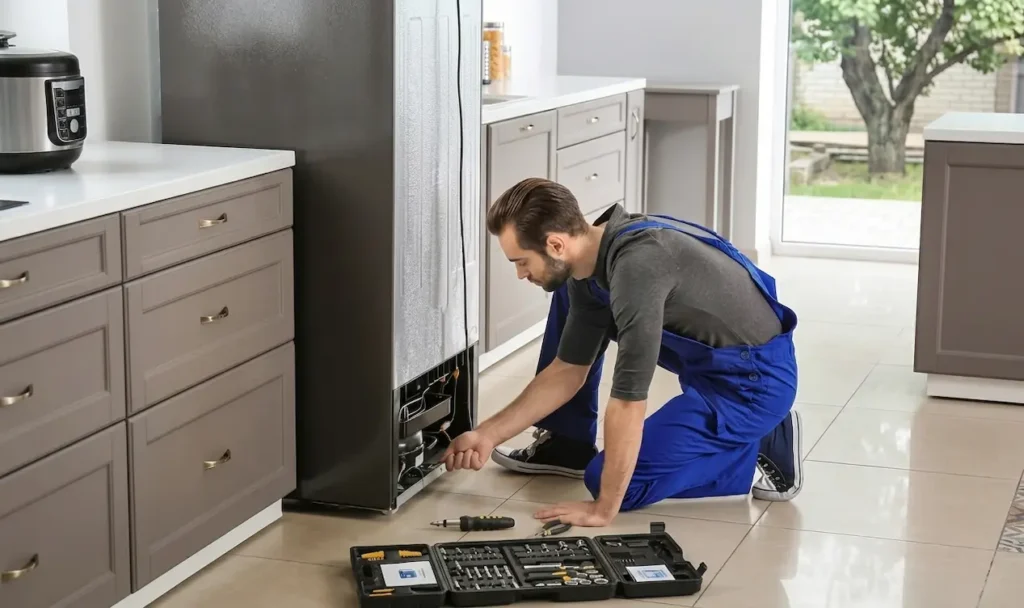
Recognizing refrigerator compressor failing signs early can save you from unexpected food loss and costly emergency repairs. You can tell your refrigerator compressor is failing if you notice one or more of these warning signs: the fridge is not cooling properly even with correct temperature settings, the compressor runs constantly without cycling off, you hear unusual clicking, buzzing, or grinding noises from the back of the unit, the exterior panels feel excessively warm, your electricity bills have spiked unexpectedly, or food is spoiling faster than normal. Any one of these symptoms alone deserves attention, but two or more appearing together strongly suggest the compressor is struggling or nearing the end of its life.
What Exactly Does a Refrigerator Compressor Do?
Before diving into the warning signs, it helps to understand what you are dealing with. The refrigerator compressor is often called the heart of the appliance. It circulates refrigerant through the cooling system, allowing your fridge and freezer to maintain safe temperatures.
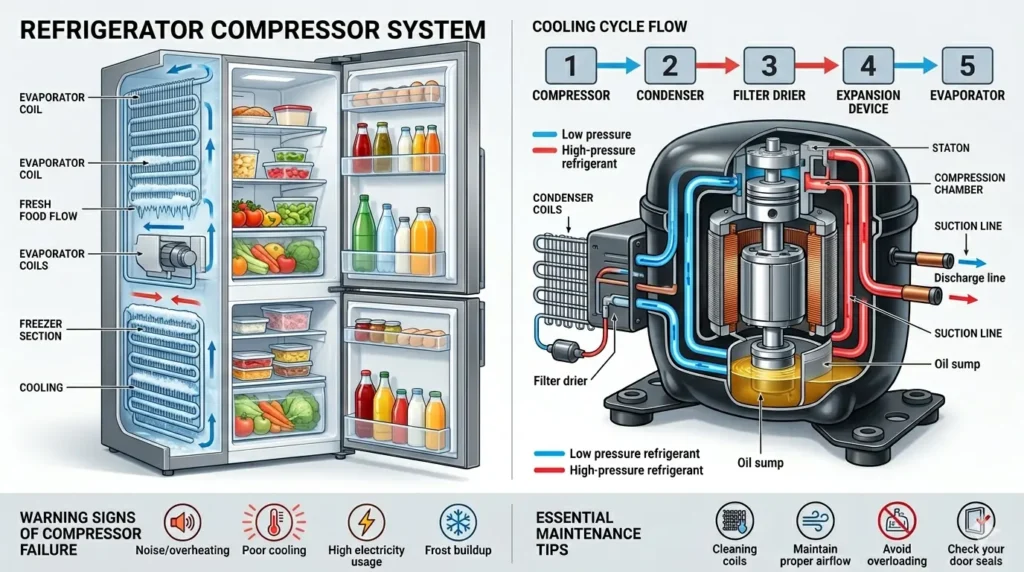
Think of it as a pump that keeps your entire cooling cycle alive. The compressor takes in low-pressure refrigerant gas, compresses it to raise its temperature and pressure, and pushes it through the condenser coils where heat is released. The refrigerant then flows through the evaporator coils inside the fridge, absorbing heat and cooling the interior air. Without a functioning compressor, this entire cycle collapses.
On average, compressors are built to last 12 to 15 years before failing. That said, maintenance habits, the quality of the unit, voltage stability, and even how often you open the door can all influence how long your compressor holds up.
The 9 Most Telling Signs Your Refrigerator Compressor Is Failing
1. The Fridge Is Not Cooling Properly
This is usually the first thing people notice. One of the earliest and most noticeable signs of compressor trouble is inconsistent cooling. You may find that food spoils faster than usual or that drinks never feel fully cold even when temperature settings remain unchanged. A failing compressor cannot efficiently circulate refrigerant, which prevents the refrigerator from reaching or maintaining the correct internal temperature.
A useful clue here: sometimes the freezer may still feel cold while the refrigerator compartment warms up, signaling uneven cooling performance. If adjusting temperature settings does not improve cooling after several hours, the issue may go beyond simple thermostat problems and point toward compressor inefficiency.
2. Unusual Noises Coming From the Back of the Fridge
Every refrigerator makes some sound. The normal hum you hear when the compressor cycles on is perfectly healthy. What you should not be hearing is anything that sounds sharp, strained, or erratic. Grinding, clicking, rattling, or loud buzzing noises often indicate mechanical stress or internal wear. A clicking sound every few minutes may mean the compressor is attempting to start but cannot complete the cycle.
Hissing or bubbling sounds near the compressor could signal a refrigerant line issue or a low refrigerant level. Any sudden change in the sound your refrigerator makes is worth investigating promptly.
3. The Compressor Runs Constantly Without Cycling Off
A healthy compressor cycles on and off throughout the day. It runs, reaches the target temperature, and shuts off until the interior warms slightly, then kicks back in. If your refrigerator seems to run nonstop without shutting off, the compressor may be struggling to maintain temperature. A failing compressor loses efficiency and must operate longer to achieve the same cooling effect. This not only increases wear but also leads to higher electricity bills.
This symptom is particularly sneaky because the fridge may still appear to be working, lulling you into thinking the problem is minor.
4. The Exterior Feels Excessively Warm
It is normal for the sides and back of a refrigerator to feel slightly warm since that is where heat from the condenser coils escapes. However, there is a difference between warm and hot. A failing compressor can cause the exterior surfaces to feel warmer than usual, indicating that the cooling system is not functioning optimally.
If the compressor or the back of the refrigerator is too hot to touch, or emits a burning smell, this may indicate a serious problem. A burning odor in particular should prompt you to unplug the appliance and call a technician without delay.
5. Your Electricity Bills Have Increased Unexpectedly
A struggling compressor works harder and draws more power to compensate for its declining efficiency. A defective compressor will require much more electricity than normal as it struggles to keep the refrigerator cool. If your bills are higher and you are noticing any of the symptoms above, it is possible the compressor has failed.
If you rule out other explanations like new appliances, seasonal changes, or increased usage, an inefficient compressor is a strong candidate.
6. The Circuit Breaker Trips Repeatedly
This one tends to alarm people, and rightly so. A failing compressor can start drawing more power, which can trip your circuit breaker. If your refrigerator is causing the circuit breaker to trip, it is a serious issue that needs professional attention immediately.
A compressor pulling excessive current is not just a cooling problem. It can become a fire hazard if left unaddressed.
7. Abnormal Frost Buildup Inside the Fridge or Freezer
Frost in the wrong places is a red flag. Abnormal frost inside the refrigerator may indicate that the compressor is not operating properly. When the compressor cannot run long enough or frequently enough to maintain the proper temperature inside, it causes temperature fluctuations that lead to condensation and ice accumulation in areas where it should not appear.
Frost around the evaporator coils in particular can point to a sealed system issue connected to compressor performance.
8. The Compressor Makes a Clicking Sound and Then Goes Silent
This specific pattern deserves its own mention. If your compressor appears to be running intermittently or not at all, you should look into a start relay issue. Compressor start relays can be damaged by a power surge.
Here is a simple at-home test you can do before calling anyone: pull the fridge away from the wall, unplug the refrigerator, find the panel on the side of the compressor, and use a flathead screwdriver to remove the screws holding the panel on. Locate the starter relay switch and unplug it from the compressor. Shake the relay switch. If you hear a rattle, then it is bad and you will need to order a replacement part. A faulty start relay is a much cheaper fix than a full compressor replacement, so this test is worth trying first.
9. Oil or Refrigerant Leaks Around the Compressor
Oil or refrigerant leaks found around the compressor may be a sign of compressor failure. Cracked compressor components or loose fittings can cause refrigerant and oil to escape. Refrigerant leaks are particularly important to address quickly, not only because they impair cooling but also because refrigerant gases carry environmental and health risks and require EPA certified technicians to handle legally.
Schedule Refrigerator Compressor Inspection
How to Confirm It Is the Compressor and Not Something Else
One of the most important things to understand is that compressor symptoms often overlap with failures in other components. Before assuming the worst, it is worth ruling out simpler culprits.
Check the condenser coils first. Dusty or clogged condenser coils make the compressor work far harder than it should. Vacuuming or brushing the coils every six months to remove dust and debris improves heat dissipation and prevents the compressor from overworking.
Check the door gaskets. A worn seal lets cold air escape, forcing the compressor to run constantly. You can test it with the dollar bill test: close the door on a bill, and if it pulls out easily, the seal is bad.
Check the condenser and evaporator fans. The condenser fan draws air over the compressor and through the condenser coils. If the fan motor is not working normally, the fridge will not cool properly and the compressor can overheat with no air to cool it.
If all of these check out and the symptoms persist, then the compressor itself becomes the most likely suspect. At that point, a licensed appliance technician with a multimeter can test the compressor motor windings to confirm whether the compressor is electrically functional.
Common Causes of Refrigerator Compressor Failure
Understanding why compressors fail helps you make sense of what went wrong and how to prevent it from happening again.
Several common causes of refrigerator compressor failure include voltage and current imbalances, short cycling which means frequent on and off cycles, operating the compressor outside its design envelope, oil leaks, poor oil circulation, a faulty expansion valve, a clogged filter drier, and high ambient temperatures combined with frequent door openings that increase the load on the system.
Natural wear and tear is also a factor, but context matters here. Most compressors are built to last a long time, so if the refrigerator is less than five years old, it is unlikely to be wear and tear that caused the compressor to fail. In younger appliances, a power surge or refrigerant contamination is a more probable explanation.
Should You Repair or Replace the Compressor?
This is the question most people reach once they confirm the compressor is failing. The honest answer is: it depends on the age of your refrigerator and the total repair cost.
Replacing refrigerator compressor units can cost anywhere from $500 to $1,500 or more, depending on the appliance make and model and your regional cost of living.
The widely accepted guideline in the appliance repair industry is the 50 percent rule. If the cost of the repair exceeds 50 percent of the cost of a new appliance, replacement is usually the smarter financial move.
Age is equally important. If the refrigerator is more than 10 years old, replacing the compressor may not be worth it. Most refrigerators have a lifespan of 10 to 15 years, and major components like the compressor are rarely replaced after the first decade. When you install a new compressor in an old fridge, you are investing hundreds of dollars into a machine that might suffer a different failure next month.
On the other hand, if the unit is relatively new and in good condition, replacing the compressor can extend its lifespan by five to ten years, making the repair a worthwhile investment.
Brand specific warranties also matter. Samsung offers a 10 year warranty on compressors, a part that often fails when fridges break down. Check your documentation or manufacturer website before paying out of pocket for anything.
Why You Should Never DIY a Compressor Replacement
It is tempting to look up a tutorial and attempt this yourself. Please resist that temptation. Compressor testing, repairs, and replacement should be left to a qualified technician that specializes in compressors and handling refrigerants. Refrigerant gas is dangerous and able to cause an explosion, while also being harmful to the environment if released. Depending on the refrigerator, replacing the compressor may also require welding.
Beyond safety, there is also the legal angle. Refrigerant work requires EPA certification under EPA refrigerant regulations due to safety and environmental risks. Attempting this without certification is a regulatory violation, not just a personal risk.
How to Extend the Life of Your Compressor
Prevention is always cheaper than repair. A few consistent habits can meaningfully extend the life of your compressor and keep your refrigerator running efficiently for years longer than average.
Clean the condenser coils at least twice a year. Keep the area around the refrigerator clear of obstructions so heat can escape from the coils freely. Minimize how often and how long you keep the door open. Ensure the refrigerator is properly balanced to prevent strain on the compressor. Leave sufficient clearance around the refrigerator for airflow and keep vents at the bottom or rear unobstructed.
Do not overpack the fridge to the point where airflow inside is blocked. Allow hot leftovers to cool down before placing them inside, since putting hot food in directly forces the compressor to work harder and longer than necessary.
Proper indoor airflow also plays a role in appliance efficiency. Dust, debris, and restricted ventilation inside the home can force refrigerators and HVAC systems to work harder than necessary. In addition to cleaning condenser coils and maintaining your fridge, homeowners should also consider professional air duct maintenance to improve indoor air circulation and reduce strain on household appliances.
When to Call a Professional
A failing refrigerator compressor rarely stops working without warning. Signs such as poor cooling, unusual noises, constant running, overheating, and rising energy bills often appear weeks or months before complete failure. Acting early can help extend the life of your appliance, prevent food loss, and reduce repair costs. If you notice two or more of these symptoms, it is best to contact a refrigerator repair service for a proper diagnosis and safe compressor testing.
If you notice two or more of these symptoms, it is best to contact a refrigerator repair service for a proper diagnosis and safe compressor testing.
The compressor is the most critical component in your refrigerator’s cooling system. Catching its decline early is the difference between a manageable repair and waking up to a kitchen full of spoiled food and a much larger bill.
Restore Cooling Performance — Contact a Repair Expert Today