
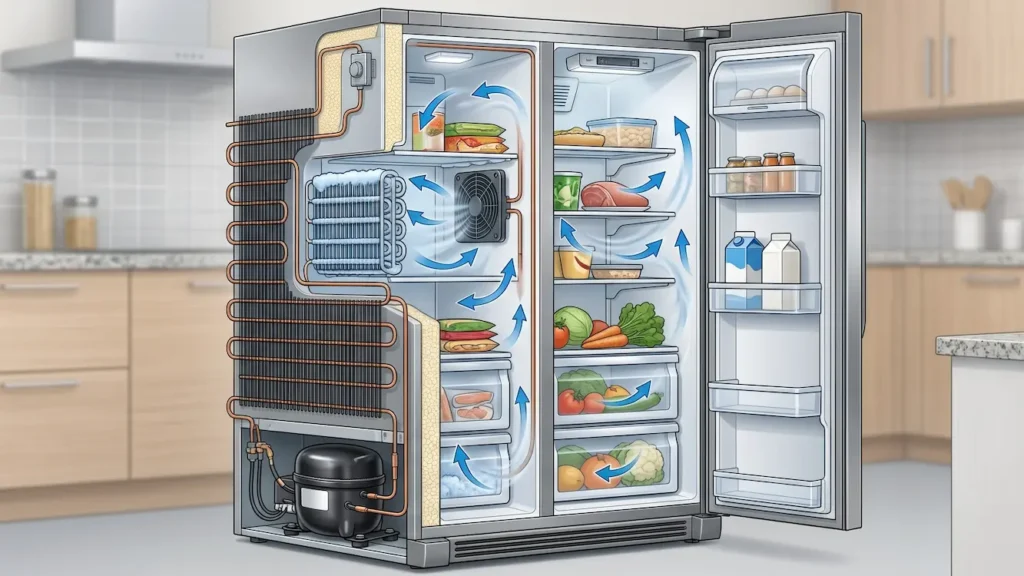
Most refrigerators last between 10 and 15 years before needing replacement. According to the United States Department of Energy, refrigerators last approximately 12 years on average. However, the lifespan of your fridge depends on several factors, including the model type, frequency of use, and proper maintenance.
Your refrigerator quietly runs 24 hours a day, 365 days a year, without ever asking for a break. It keeps your leftovers safe, your drinks cold, and your groceries fresh. Most homeowners never think about it until something goes wrong, and by then, the damage to both the appliance and the grocery budget can already be done. If you have been wondering whether your fridge has a few good years left or whether it is quietly costing you more than it is worth, this guide covers everything you need to know.
Refrigerator Lifespan by Type: Not All Fridges Are Built the Same
Different refrigerator styles vary in longevity. Top-freezer models last 15 to 20 years, bottom-freezer models last 13 to 17 years, side-by-side refrigerators last 8 to 14 years, and French door models last 10 to 15 years. Built-in refrigerators often reach 20 to 25 years.
Here is a quick breakdown to help you compare:
Top-Freezer Refrigerators are the workhorses of the appliance world. Their simpler design means fewer components that can fail, which is why they tend to outlive more feature-heavy models. If you have one of these and treat it well, it can easily serve your household for close to two decades.
French Door and Side-by-Side Models come packed with features like ice makers, water dispensers, and smart sensors. While these conveniences are great, extra features may improve convenience but reduce lifespan because there are simply more parts that can wear out or malfunction over time.
Built-In Refrigerators are premium units designed for longevity. They are built with stronger compressors and better insulation, allowing them to last significantly longer than standard freestanding models, though repairs tend to be more expensive when they are needed.
Compact and Mini Fridges have the shortest lifespans of all. Smaller, more compact refrigerators have a shorter lifespan of four to 12 years, with the average lasting around eight years. They are often moved frequently and used in environments like garages or offices that are harder on the cooling system.
| Refrigerator Type | Average Lifespan |
|---|---|
| Top-Freezer | 15–20 years |
| Bottom-Freezer | 13–17 years |
| French Door | 10–15 years |
| Side-by-Side | 8–14 years |
| Built-In | 20–25 years |
| Mini Fridge | 4–12 years |
Key Factors That Determine How Long Your Refrigerator Will Last
Understanding what causes a refrigerator to age faster can help you take the right steps to protect yours. Usage, maintenance, and refrigerator type are the biggest factors that determine how long a unit will last.
Brand and Build Quality
Brand choice significantly affects lifespan. Premium models often last twice as long as budget options, while mid-range brands offer the best balance of cost and durability. Brands like Whirlpool, GE, LG, and Sub-Zero have long reputations for producing reliable compressors and durable cabinetry. That said, even budget brands can reach their full lifespan with consistent care.
Placement and Environment
Units placed in hot or poorly ventilated areas may wear out faster, while those in controlled, well-ventilated spaces tend to last longer. Proper installation, including leveling and ensuring adequate airflow, also helps reduce strain on components and extends the appliance’s longevity. This is worth keeping in mind if you have a second fridge running in an attached garage in colder climates like Fargo, ND, where seasonal temperature extremes can stress the sealed system during both summer heat and harsh winters.
How You Load and Use It
Overloading your fridge restricts airflow and forces the compressor to run constantly. An overstuffed fridge restricts airflow, making the compressor work harder. Conversely, refrigerators that are nearly empty also struggle to regulate temperature. A balanced load is ideal.
Energy Efficiency and Technology
In recent years, many advancements have been made with energy-efficient refrigerators and other appliances. According to a study done by researchers at Cornell University, these new units require less energy on average than older models, which means that your investment in a new refrigerator could be offset every month by lower utility bills and the ability to keep your food longer than before.
Warning Signs Your Refrigerator Is Nearing the End of Its Life
Refrigerators rarely stop working overnight. They give you signals along the way, and paying attention to those signals early can save you from a full food spoilage emergency. Here are the most common ones to watch for.
Food Is Spoiling Faster Than Usual
This is one of the clearest indicators that something is wrong. If food doesn’t stay fresh as long as it used to, this is a strong sign your fridge is no longer performing efficiently. The unit may be struggling to hold a consistent internal temperature, which points to issues with the thermostat, compressor, or evaporator fan.
Unusual or Excessive Noise
Your refrigerator hum should be steady and quiet in the background. Loud noises like buzzing or clicking can mean internal parts are wearing out. A grinding or rattling sound coming from the back or bottom of the unit often points to a failing condenser fan or compressor motor, both of which are serious components.
Excessive Frost Buildup
If ice is accumulating in unusual places inside the freezer compartment, or the freezer is frosting over more heavily than normal, the defrost system may be failing. This is a repair situation that should be addressed before it leads to bigger compressor issues.
Sweating and Condensation on the Outside
There’s more condensation than usual on the outside of your fridge when the door gasket is no longer sealing properly. Warm air is getting in, humid air is getting out, and the unit is working overtime to compensate.
Rising Energy Bills
Older refrigerators that are struggling to maintain temperature draw more electricity. If your utility bill has crept up without an obvious explanation, your aging fridge could be the culprit. Older refrigerators tend to be less energy-efficient compared to newer models, which can result in higher energy consumption and potentially shorter lifespans.
Water Leaking Under or Inside the Unit
Pooling water inside or underneath your refrigerator usually means a clogged defrost drain or a failing water line connection. Left unaddressed, this can lead to mold growth and damage to your flooring.
Frequent Breakdowns
If you find yourself calling for repairs more than once a year, the refrigerator is likely reaching the end of its useful life. One repair every few years on a younger unit is normal. Repeated service calls on an older appliance are a financial warning sign.
Not Sure Whether to Repair or Replace? We Can Help You Decide
Should You Repair or Replace Your Refrigerator?
This is the question most homeowners wrestle with, and the answer comes down to age, repair cost, and how reliable the unit has been.
The 50% Rule
One commonly used guideline is the 50% rule: if repair costs approach or exceed half the price of a replacement unit, replacement may be the more practical option. For example, if a new comparable refrigerator costs $1,200 and your repair estimate is $700, replacement is almost always the better investment.
The Age Factor
Repairs make sense for units less than 10 years old, especially for minor issues like faulty fans, door seals, or thermostat adjustments. These fixes are affordable and extend the usable life. However, if your refrigerator is more than 12 years old and repairs are frequent, replacement is usually a smarter choice.
When Repair Makes Perfect Sense
Repairing is usually worth it when the issue is minor, the appliance is under 5 years old, or the repair cost is less than 50% of a replacement. A broken door seal, a blocked defrost drain, or a worn thermostat are all relatively affordable fixes that can add years to the life of a refrigerator that is otherwise running well.
If your refrigerator is showing trouble but is still under 10 years old, getting it looked at by a professional is almost always worth the call. Fast Fix Appliance Repair provides expert refrigerator repair service in Fargo for homeowners dealing with everything from cooling problems to compressor issues, and getting a professional diagnosis first means you are never guessing about whether repair or replacement is the right call.
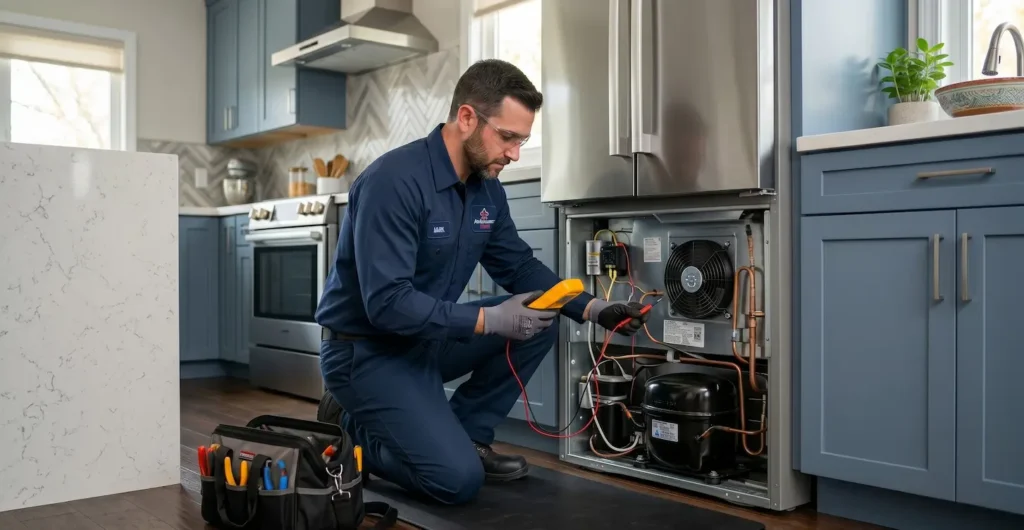
How to Make Your Refrigerator Last as Long as Possible
A little regular maintenance goes a long way. Most people are surprised to learn just how much they can extend the life of their fridge with a few simple habits.
Clean the Condenser Coils Regularly
Clean condenser coils twice yearly. Located either on the back or beneath the refrigerator, these coils release heat from the cooling system. When dust-covered, they force the compressor to work harder. A coil brush or vacuum attachment makes this job easy and takes less than 15 minutes.
Inspect the Door Gaskets
Check and clean door gaskets regularly. Wipe them with mild soap and water to remove food debris and check for cracks or tears that could allow cool air to escape. A quick dollar bill test works well here. Close the door on a bill and try to pull it out. If it slides out easily, the seal needs attention.
Keep the Temperature Consistent
Keep temperatures consistent at 37°F for the fridge and 0°F for the freezer. Running your refrigerator colder than necessary does not preserve food any better, but it does put extra strain on the compressor over time.
Give It Room to Breathe
Keep the fridge away from ovens, stoves, or direct sunlight. Heat nearby shortens lifespan by making the compressor run constantly. Proper ventilation around the sides and back of the unit allows heat to dissipate naturally.
Do Not Ignore Small Issues
Schedule professional servicing when cooling problems appear. Early repairs prevent bigger breakdowns and keep the unit lasting longer. A small refrigerant leak or a struggling evaporator fan caught early costs far less to fix than waiting until the compressor burns out entirely.
Homeowners in Fargo and surrounding areas including West Fargo, Mapleton, Glyndon, Harwood, Horace, Moorhead, Dilworth, Argusville, and Georgetown can count on Fast Fix Appliance Repair for timely, honest assessments of whether a repair will genuinely extend the life of their appliance or whether the money is better put toward something new.
What Happens to Your Refrigerator’s Compressor Over Time?
The compressor is essentially the heart of your refrigerator. It pressurizes the refrigerant and keeps the cooling cycle running continuously. A refrigerator compressor typically lasts 10 to 15 years. If it fails early, it is often due to overheating, dirty coils, or electrical issues. Because compressor repair can be expensive, the age of the fridge should always be considered before replacing it.
When the compressor starts to fail, you may notice the refrigerator running almost constantly without getting cold enough, the unit feeling warm to the touch on the outside, or a loud clicking sound when the compressor tries to start and cannot. At this stage, whether to repair or replace comes down to how old the unit is and what a replacement compressor would cost relative to a new refrigerator.
Refrigerator Lifespan by Brand: A General Overview
Not all brands age at the same rate. Better insulation, stronger compressors, and high-quality construction all significantly extend the lifespan. Here is a general picture of how major brands compare in terms of longevity:
Brands with a reputation for long-lasting performance include Whirlpool, GE, LG, Samsung, and Sub-Zero. Premium built-in brands like Sub-Zero and Thermador regularly reach the 20-year mark with proper care, though their repair costs are higher when issues arise. Mid-range brands like Whirlpool and GE tend to be among the most cost-effective in terms of lifespan versus purchase price. Budget brands generally fall on the lower end of the 10 to 15 year range, especially without consistent maintenance.
If you are also thinking about energy consumption alongside longevity, it is worth knowing that ENERGY STAR certified refrigerators are about 9 percent more energy efficient than models that meet the federal minimum energy efficiency standard, and replacing an older unit with a certified model can save you roughly $150 over the 12-year lifetime of the product. The U.S. Department of Energy’s program is one of the most reliable free resources available for comparing certified models and understanding how much your current refrigerator may be costing you to run each year.
When Is the Right Time to Call a Professional?
There is a temptation to watch a YouTube tutorial and attempt refrigerator repairs independently, and for simple things like replacing a water filter or adjusting a shelf, that makes sense. But for anything involving the sealed system, the compressor, refrigerant lines, or electrical components, professional service is the right call.
Complex issues like electrical faults, compressor failure, or water leaks should always be managed by professionals. These repairs require training and specialized tools. If your fridge keeps breaking down, fails to cool evenly, or leaks water, it’s time to seek expert help. A trained technician can diagnose issues, suggest cost-effective solutions, and restore performance. Acting quickly reduces the risk of food waste and extends the life of your appliance.
If you are noticing any of the warning signs covered in this article and your refrigerator is between 8 and 12 years old, a professional inspection will tell you exactly where things stand. Fast Fix Appliance Repair offers reliable fridge repair service in Fargo and the surrounding region, with technicians experienced in diagnosing all major refrigerator brands including Samsung, LG, Whirlpool, GE, Frigidaire, and KitchenAid.
Frequently Asked Questions
How long does the average refrigerator last?
Most refrigerators last 10 to 15 years, with the national average falling around 11 years. High-end models may last longer with proper care, while compact units generally have shorter lifespans.
Is it worth repairing a refrigerator that is 10 years old?
It depends on what needs to be fixed. Minor issues like door seals, thermostats, or fans are generally worth repairing even on a 10-year-old unit. Major components like the compressor on a fridge that old require more careful consideration using the 50% rule.
What shortens a refrigerator’s lifespan the most?
Dirty condenser coils, worn door gaskets, poor ventilation, overloading, and placement in high-heat environments are the most common reasons refrigerators fail before their time.
Can a refrigerator last 20 years?
Built-in refrigerators tend to last a little longer, with a typical lifespan of 20 years. Standard top-freezer models can also approach that range with excellent care and consistent maintenance.
How do I know if my compressor is failing?
Signs include the unit running almost constantly, food not staying cold, the exterior of the fridge feeling warm, or a clicking noise when the appliance tries to start its cooling cycle.
Ready to Fix Your Fridge? Contact Fast Fix Appliance Repair Now
Final Thoughts
Your refrigerator is one of the hardest-working appliances in your home, and understanding its lifespan helps you make smarter decisions about when to repair, when to maintain, and when to plan for something new. Most refrigerators will serve faithfully for 10 to 15 years, with simpler models typically outlasting feature-rich options. By understanding the factors that affect lifespan, recognizing warning signs of impending failure, and implementing a regular maintenance routine, you can maximize your refrigerator’s useful life and make informed decisions about when repair or replacement makes the most sense for your situation.
If your refrigerator is showing any of the warning signs discussed in this article and you are in the Fargo, ND area or nearby communities including West Fargo, Moorhead, Dilworth, Mapleton, Glyndon, Harwood, Horace, Argusville, or Georgetown, reach out to the team at Fast Fix Appliance Repair. Getting an honest, professional assessment early almost always saves money in the long run, whether the answer is a targeted repair or guidance toward a replacement that better fits your household.