
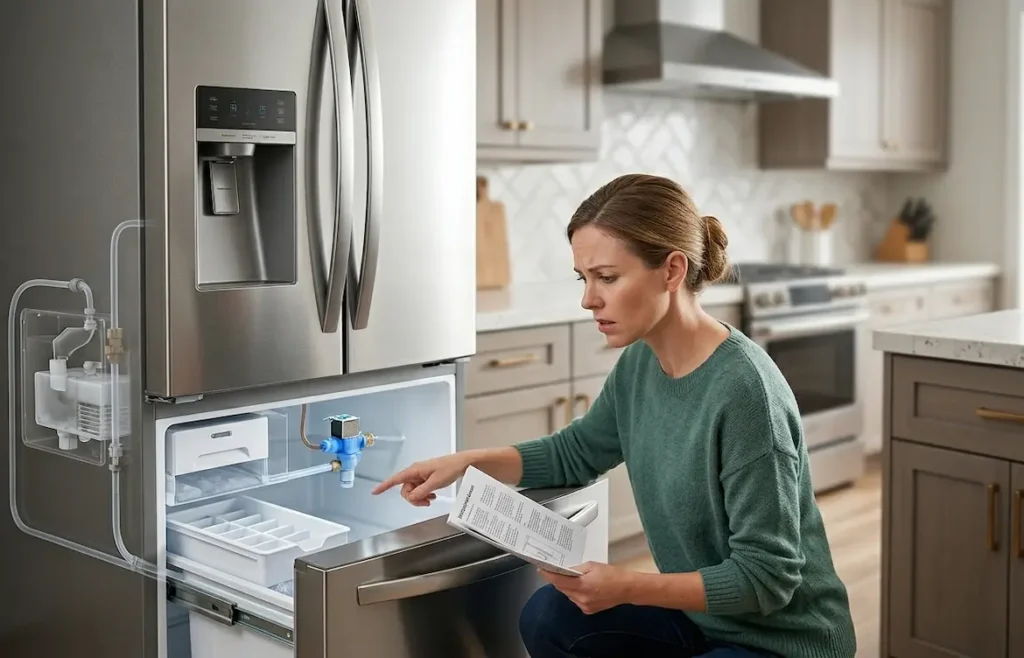
If your refrigerator ice maker is not making ice, the most likely causes are the ice maker being accidentally turned off, a clogged water filter, a kinked or frozen water supply line, incorrect freezer temperature, or a faulty water inlet valve. Start by checking whether the ice maker switch or control arm is in the off position, then work through each component one by one. Most of these issues can be resolved at home without a service call.
If you walked up to your refrigerator expecting a glass full of ice and got nothing, you are not alone. Ice maker problems are one of the most common calls appliance repair technicians receive in Fargo and across the country. The good news is that many of the causes are surprisingly simple to diagnose yourself, and only a few situations genuinely require a professional.
This guide walks you through every major cause, what to look for, and when it is time to stop troubleshooting and pick up the phone.
Is the Ice Maker Actually Turned On?
This sounds too basic to mention, but it catches a lot of people off guard. The ice maker may be off at the switch, arm, or control setting, and this is a common cause of ice maker failure after cleaning, moving items around in the freezer, or changing settings.
Ensure that the ice maker is turned on and not paused, check that the water supply line is connected and the shut-off valve is open, and make sure the ice maker arm is in the down position. On many Whirlpool, LG, Samsung, GE, and Frigidaire models, the control arm gets bumped into the raised position accidentally, which signals the unit to stop producing ice entirely.
If your refrigerator uses a digital control panel instead of a physical arm, navigate to the ice maker settings and confirm it is enabled. Some models also have a dedicated on/off switch inside the freezer compartment that is easy to miss.
Check the Freezer Temperature First
Temperature is the foundation of ice production. Your ice maker may not be able to keep up with its intended rate of ice production when the refrigerator or freezer temperatures are set too high, resulting in slow ice production, cubes that are too small, or no ice production at all.
Ensure the freezer temperature is set between 0 and 5 degrees Fahrenheit for optimal ice production, and regularly check and adjust the temperature settings if needed.
If your freezer temperature has been drifting higher due to a failing thermostat, a gasket issue, or frequent door openings, the ice maker will slow down or stop entirely. No ice can be an early sign of a freezer cooling problem, so if adjusting the temperature setting does not restore performance within 24 hours, look deeper.
Inspect the Water Supply Line
Water cannot reach the ice maker if the supply line is blocked, kinked, or shut off. An ice maker cannot make ice without water, so you should check that the shutoff valve under the sink or behind the refrigerator is fully open, and that the water line behind the fridge is not kinked or crushed.
Additionally, check for any kinks or blockages in the water line that might hinder the water flow, and straighten the water source line to restore adequate water flow and pressure. To help reduce the chances of a pinched water line, do not push the refrigerator too far back against the wall or cabinet.
A common mistake homeowners make is pushing the refrigerator flush against the wall after cleaning behind it, which crimps the flexible water line and gradually cuts off flow. Pull the unit out a few inches and inspect the line from the wall connection to the back of the refrigerator.
Replace the Water Filter
A dirty water filter is one of the most frequently overlooked causes of ice maker failure, especially because the water dispenser on the door may still work even when the filter is restricting flow to the ice maker.
Sediment can eventually build up in the water filter when you do not change it every 6 months to a year, and eventually the sediment in an unchanged filter can restrict water flow going to the ice maker.
It is recommended to replace the water filter every 6 months, or as suggested by the manufacturer. A clogged filter can reduce water flow to the ice maker, leading to ice production problems. Even if the water dispenser is working fine, a dirty filter can still cause problems with the ice maker.
After replacing the filter, flush several gallons of water through the dispenser before expecting full ice production to resume. This clears air pockets and any loose carbon particles from the new filter.
The Water Inlet Valve May Be Faulty
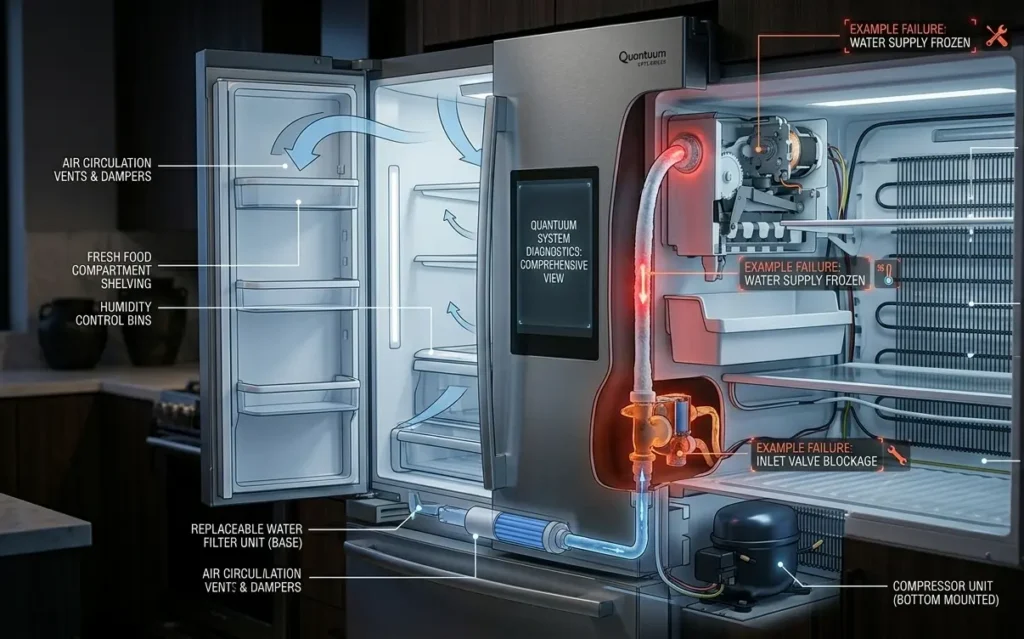
The water inlet valve is an electrically controlled valve that opens to let water flow into the ice maker each time the unit calls for a new cycle. A faulty water inlet valve can prevent the ice maker from getting water, even if the filter and supply line seem okay.
First, check the water pressure feeding the valve. If the pressure is sufficient at 20 psi or higher, it means you may need to replace the water inlet valve.
If the valve is clogged with mineral deposits, clean it with a descaling solution or vinegar. A common sign of a bad inlet valve is when your water dispenser is working but your ice maker is not, since the inlet valve could be the culprit.
Testing the inlet valve requires a multimeter to check for continuity. If you are not comfortable with electrical components, this is the point where a trained appliance technician should take over. Our team at Fast Fix Appliance Repair Fargo handles water inlet valve diagnosis and replacement regularly and can get your ice maker running without the guesswork.
Is the Water Fill Tube Frozen?
In colder climates like Fargo, North Dakota, this one shows up more than people expect. A refrigerator with freezing temperatures may cause the water inlet tube feeding your ice maker to freeze up, making it difficult for liquid to pass through and fill the ice trays, and you may experience this more often during uniquely cold times of the year.
The water inlet tube is located at the rear of the ice maker and can be defrosted with warm air or water, though you may be able to unfreeze the waterline yourself. It is best to leave it up to a professional to help diagnose and repair the problem.
If your water fill tube appears frozen on the outside, there is definitely something blocking the water from entering the ice maker. You can use a hair dryer on the lowest heat setting to gently thaw the tube, but if freezing keeps recurring, there may be a deeper issue with freezer temperature regulation or a defective fill tube that needs to be replaced.
Solve Ice Maker Problems Today
Check the Ice Maker Control Arm
The control arm, sometimes called the shut-off arm or harvest arm, is a mechanical sensor that rides on top of the ice bin. When the bin fills up, the arm rises to the off position and halts production. When ice is used, it drops back down and restarts the cycle.
On select models, the ice maker control arm is a large plastic or metal handle that rests on the side or top of the ice bin and is responsible for gauging ice levels in the bin and pausing ice production when the bin is full.
Inspect the control arm for any breaks or cracks, ensuring that it is firmly attached and in the correct position according to your owner’s manual. If you notice any damage, it is best to contact a professional for assistance with diagnosing the issue and arranging for a replacement or repair.
Sometimes the arm gets stuck in the up position due to an ice clump pushing it or because the arm itself has cracked. Clear any ice buildup around it with a plastic utensil, never metal, and see if it drops back into position on its own.
Look for Ice Jams in the Bin or Chute
Ice can clump together over time, especially in humid conditions or when the bin goes undisturbed for long periods. These clumps can jam the ejector blades, block the dispenser chute, or trick the control arm into thinking the bin is full when it is mostly empty.
You will not get any ice through the dispenser in your fridge door when ice cubes are jammed up in the chute. When you press the ice dispenser lever and no ice drops, check the dispenser chute for a clog, since clearing the clog could fix the ice supply problem.
Remove the ice bin completely, break up any large clumps by hand, wipe the bin clean, and reinstall it. If the problem persists, the ice maker may not be cycling at all and the cause lies with one of the components covered above.
Try Resetting the Ice Maker
Before calling for service, a reset is always worth attempting. Sometimes you can fix ice maker problems by resetting the ice maker module. You can reset the ice maker in many refrigerators by simply turning it off for a minute and then turning it back on.
Turn the ice maker off, wait 10 seconds, then turn it back on. If your ice maker has a reset button, hold it down for a few seconds. If that does not work, try cutting the power completely by unplugging the fridge and waiting about five minutes before plugging it back in.
After a reset, give the unit 24 hours before deciding whether it worked. Ice makers do not produce a full bin instantly. Most residential models take 6 to 12 hours to fill the bin under normal operating conditions.
When the Ice Maker Assembly Itself Has Failed
If you have worked through every step above and still have no ice, the ice maker assembly itself may have failed. Check the assembly for any visible signs of damage or wear and ensure that all components like the water fill tube and the ejector arm are in good condition and functioning as they should. If you suspect that the ice maker assembly is faulty, you may need to replace it.
Internal components like the thermostat inside the ice maker module, the ejector motor, or the mold heater that releases cubes can all fail independently. These are not practical DIY repairs because they require disassembly of the ice maker unit and often involve live voltage testing.
According to American Home Shield’s refrigerator repair cost breakdown, fridge repairs typically range from $200 to $1,000 depending on the component involved, and since the average refrigerator lifespan runs between 10 and 18 years, catching ice maker issues early can mean the difference between a simple repair and a full replacement.
What if the Water Dispenser Works But the Ice Maker Does Not?
This is a specific scenario that confuses a lot of homeowners. This can happen with a frozen fill tube, an ice maker component problem, or an ice maker-specific control or valve issue, even if the refrigerator still dispenses water.
The water inlet valve on most refrigerators has two solenoids. One controls the dispenser and one controls the ice maker. If the ice maker solenoid has failed while the dispenser solenoid is still working, water will come out of the door just fine but nothing will reach the ice mold. This is a component-level repair that requires professional diagnosis.
For Fargo residents dealing with this exact problem, our fridge repair service team can test the valve solenoids quickly and replace just the faulty component rather than the entire valve assembly in most cases.
How Long Should Ice Maker Troubleshooting Take to Show Results?
After making any adjustment, whether it is changing the filter, adjusting temperature, clearing a jam, or performing a reset, give the unit at least 24 hours to respond. Ice production cycles take time, and the freezer itself needs time to reach proper operating temperature after any change.
If 24 hours pass with no ice and you have checked every item on this list, the problem is mechanical or electrical and will not resolve on its own.
Signs It Is Time to Call a Professional in Fargo
You should stop DIY troubleshooting and call an appliance repair technician when:
The ice maker runs through its cycle but produces no water at all, even after confirming the supply line is open and the filter is new. This typically points to a failed inlet valve or control board issue.
You hear the ice maker attempting to harvest but no cubes drop. This usually means the mold heater or the ejector motor has failed.
Ice forms inside the ice maker compartment in large sheets or around components rather than in the mold. This indicates a defrost system problem affecting the ice maker.
The refrigerator is also experiencing cooling issues alongside the ice maker problem. In that case, the ice maker failure may be a symptom of a larger refrigerant or compressor issue.
Our refrigerator repair service in Fargo covers all of these scenarios with same-day diagnosis in most cases across Fargo and surrounding areas including West Fargo, Moorhead, and Dilworth.
Brands Commonly Serviced for Ice Maker Issues
Ice maker problems are not brand-specific, but some models are more prone to particular failures. Technicians in Fargo regularly work on ice maker issues in:
Samsung refrigerators, particularly French door models where the ice maker is located in the upper freezer drawer and tends to freeze over. LG refrigerators, where the water inlet valve and ice maker assembly failures are frequently reported. Whirlpool and Maytag units with the standard arm-style ice maker that can get stuck after routine cleaning. GE Profile refrigerators where the control board governs ice maker cycles and can lose communication with the unit. Frigidaire and Electrolux models where the fill tube freezing issue is particularly common.
If your refrigerator is under warranty, check with the manufacturer before scheduling third-party service. If the warranty has expired, a local appliance repair shop in Fargo will almost always be faster and more affordable than a manufacturer service visit.
Preventive Maintenance to Keep Your Ice Maker Running
The best way to avoid ice maker problems is a consistent maintenance routine. Replace the water filter on schedule, typically every six months, even if no warning light has appeared. Keep the freezer temperature at or near 0 degrees Fahrenheit. Periodically remove and clean the ice bin to prevent clumps and odor buildup. Avoid overpacking the freezer directly around the ice maker, which can restrict airflow and cause localized temperature swings. Once or twice a year, pull the refrigerator out from the wall and inspect the water supply line for kinks, wear, or slow leaks.
A well-maintained ice maker on a quality refrigerator can last ten years or more. Neglecting the filter and temperature settings are the two fastest ways to shorten that lifespan.
If you have worked through this guide and your ice maker is still not cooperating, do not keep experimenting with components you are not certain about. A professional diagnosis in Fargo is fast, affordable, and prevents the kind of secondary damage that can turn a simple repair into an expensive one. Reach out to Fast Fix Appliance Repair Fargo and let a certified technician take it from there.
Book your refrigerator repair today and get your ice maker working again fast.
very informative article