
Water pooling inside my refrigerator is most commonly caused by a blocked defrost drain, a worn door gasket, or excessive condensation from high indoor humidity. These issues prevent proper moisture drainage during the defrost cycle, causing water to collect at the bottom of the fridge or beneath the crisper drawers. Most causes can be diagnosed at home, though some require professional refrigerator repair to fix safely and permanently.
If you have ever opened your refrigerator and found a small puddle sitting at the bottom, you are not alone. This is one of the most frequently reported appliance problems among homeowners in Fargo, ND, and the surrounding areas. While it might seem like a minor inconvenience at first, ignoring standing water inside your fridge can damage food, encourage mold growth, and eventually harm the appliance itself. Understanding why this happens is the first step toward fixing it the right way.
How a Refrigerator Manages Moisture
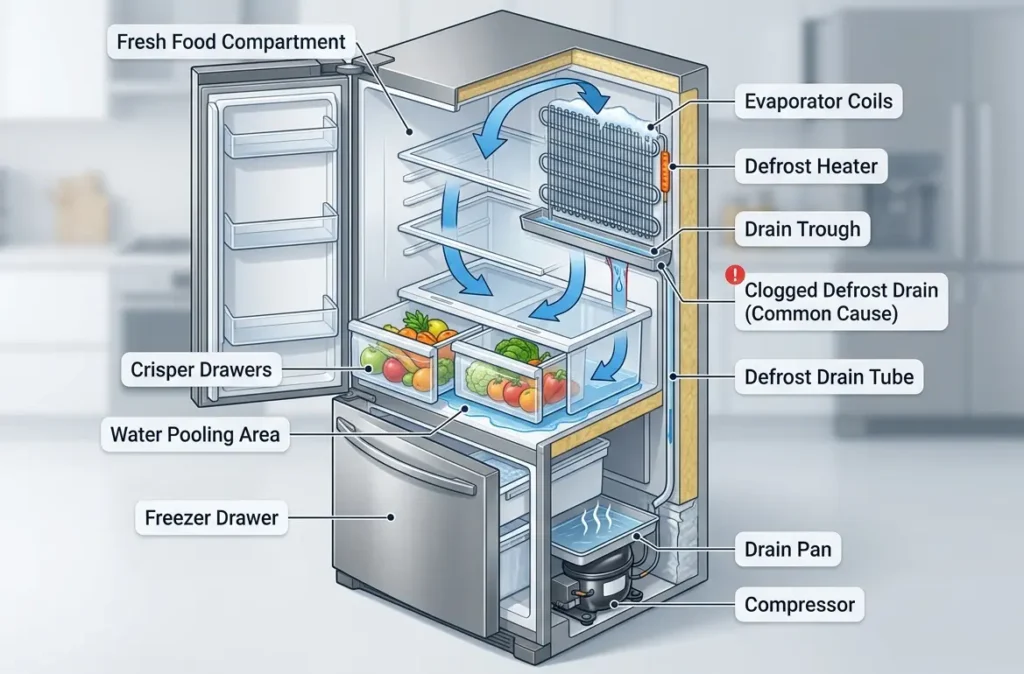
Before jumping into causes, it helps to understand what your refrigerator is designed to do with water. Modern refrigerators use an automatic defrost system that periodically heats the evaporator coils to melt away built-up frost. That melted frost turns into water, flows through the defrost drain tube, and collects in a drain pan located underneath the unit near the compressor. Under normal operating conditions, the heat from the compressor causes that water to evaporate naturally.
When any part of this system breaks down or gets obstructed, water has nowhere to go except inside your refrigerator cabinet.
The Most Common Reasons Water Pools Inside a Refrigerator
1. A Clogged or Frozen Defrost Drain
This is by far the most frequent culprit. The defrost drain is responsible for channeling excess moisture that forms during the defrost cycle. Over time, the drain can become clogged with food debris, ice buildup, or regular wear and tear. When this occurs, water can back up and spill into the refrigerator instead of draining correctly.
In top-freezer models, a frozen defrost drain is especially common. Water collecting under the crisper drawers in a top-freezer refrigerator is often caused by a clogged defrost drain tube below the evaporator.
What you can try: Unplug the refrigerator, remove the back panel inside the freezer compartment, and gently flush the drain with warm water using a turkey baster. A pipe cleaner can help dislodge any stuck bits of food or grime in the tube. Once you have flushed the drain, check that water can flow freely through the entire drain tube. If the drain is frozen solid, a hair dryer on a low setting can carefully thaw it before flushing.
2. Worn or Damaged Door Gaskets
The rubber door seal around the perimeter of your refrigerator door keeps warm, humid air out. A worn or damaged door seal can allow warm air to enter the fridge, causing excess condensation to form inside, which can lead to water pooling.
A simple test: close your refrigerator door on a piece of paper. If you can pull the paper out with little resistance, the seal is not creating enough of a barrier and likely needs replacement.
What you can try: Inspect the entire length of the gasket for visible damage. Clean it with warm soapy water, since built-up grime can prevent a proper seal. If the gasket is cracked or warped, it needs to be replaced with a manufacturer-compatible part.
3. Improper Refrigerator Leveling
This one surprises many homeowners. Refrigerators are designed to operate with a slight rear tilt, helping water run off easily into the drain pan. If your refrigerator is leaning forward or sitting unevenly on the floor, water does not drain the way it should and begins to pool instead.
What you can try: Get a small spirit level and place it on one of the shelves inside to check the level of your fridge from side to side and front to back. If the unit is off, adjust the leveling feet or rollers at the base until you achieve a slight backward tilt.
4. High Indoor Humidity and Condensation
Every time you open the refrigerator door, a wave of warm, moisture-laden air enters the cabinet. This air condenses on cold surfaces and contributes to water buildup. If your home has a high humidity level, some of this moisture will get into your fridge each time you open the refrigerator door and build up over time. This excess moisture will lower the internal temperature of your freezer and refrigerator and cause water to pool inside.
In Fargo, ND, where temperatures swing dramatically between seasons, indoor humidity levels can vary considerably. Homes without adequate moisture control can experience persistent refrigerator condensation during warmer months.
What you can try: Store food in airtight containers, avoid placing hot dishes directly in the fridge, and keep the door open only as long as necessary. A kitchen dehumidifier can also reduce the amount of moisture entering the appliance.
Not Sure What’s Causing the Problem? Let Our Fargo Technicians Take a Look.
5. A Cracked or Overflowing Drain Pan
The drain pan underneath your refrigerator quietly does its job year after year without attention. If your drain pan is cracked or damaged, it might not be able to hold the water that collects from normal condensation and defrosting cycles. This can lead to leaks and water pooling inside the refrigerator.
What you can try: Pull the refrigerator away from the wall, locate the drain pan near the base, and inspect it carefully. A dirty pan can be cleaned with a baking soda and warm water solution. A cracked or warped pan needs to be replaced with a compatible part.
6. A Faulty or Clogged Water Filter
For refrigerators equipped with an ice maker or water dispenser, a clogged or improperly installed water filter can cause internal leaks. Unusual water pooling near the ice maker or dispenser, poor tasting or discolored water, and unexplained water stains inside the fridge are all signs of a filter issue.
Most manufacturers recommend replacing the water filter every six months. If you recently changed your filter and noticed water pooling shortly afterward, a loose connection or incompatible filter could be the source.
What you can try: Check that the filter is properly seated and locked into place. If it is overdue for replacement, swap it out for a manufacturer-approved filter and monitor the situation for 24 hours.
7. Ice Buildup Around the Evaporator Coils
When the automatic defrost system malfunctions, whether due to a failed defrost heater, a faulty defrost thermostat, or a bad defrost timer, frost accumulates on the evaporator coils unchecked. Eventually that frost melts on its own and produces far more water than the drain system can handle at once, resulting in pooling inside the fridge.
This type of issue is more complex because it involves the refrigerator’s electronic or mechanical defrost components rather than a simple clog. If you notice unusual ice buildup inside your freezer along with water pooling in the fridge, the defrost system is likely involved.
What you can try: You can manually defrost the refrigerator by unplugging it and allowing all ice to melt completely. However, if the defrost system is genuinely malfunctioning, the ice will return within a few days. At that point, a qualified appliance technician should inspect and replace the defective component.
8. A Blocked or Kinked Water Supply Line
Refrigerators with built-in water dispensers or ice makers are connected to your home’s water supply through a small supply line. A kinked, damaged, or blocked water line can lead to leaks inside the refrigerator, along with unexplained water stains and leaks near connection points. You might notice water appearing near or behind the ice maker connection or around the dispenser area.
What you can try: Pull the refrigerator away from the wall and inspect the supply line for any kinks, bends, or visible cracks. Make sure the line is not being compressed by the unit itself. A cracked supply line needs to be replaced promptly.
Refrigerator Brands Prone to Drain Issues
While water pooling can happen with virtually any refrigerator, certain brands and models are more commonly reported with this problem. Whirlpool, Samsung, LG, GE, Frigidaire, and Maytag top-freezer models are frequently brought in for defrost drain clogs in the Fargo area. French door refrigerators from Samsung and LG are also known for ice maker-related leaks due to design quirks in their water delivery systems.
If you own one of these models and are experiencing pooling water, it is worth knowing that the fix is usually straightforward when caught early. Waiting too long can allow standing water to damage shelving, degrade door gaskets further, or cause mold and mildew to develop inside the cabinet.
What Happens If You Ignore Water Pooling in Your Fridge
Many homeowners assume that wiping up the water and moving on is good enough. In reality, standing water inside a refrigerator creates a chain of problems. Mold and mildew thrive in moist, enclosed environments, and once they take hold inside a fridge, they can contaminate food and produce persistent odors. Prolonged moisture exposure can also warp shelving, corrode metal components, and eventually cause the defrost system or compressor to work harder to maintain temperature. What starts as a simple clog can turn into a costly repair if left unaddressed.
When DIY Fixes Are Not Enough
Some refrigerator water problems are straightforward enough for a motivated homeowner to resolve over a weekend. But others involve components like the defrost heater, evaporator fan motor, main control board, or sealed refrigeration system that require professional tools and expertise to diagnose and fix safely.
You should contact a qualified appliance technician if the water returns within a day or two of clearing the defrost drain, if ice buildup inside the freezer is excessive or recurring, if the refrigerator is not maintaining proper temperature alongside the water pooling, if you notice unusual noises such as clicking or humming along with the leak, or if the water appears to be coming from inside the walls of the refrigerator cabinet rather than the floor or a visible drain.
Attempting to disassemble sealed refrigerant systems or electrical defrost components without proper training can cause further damage and may void your warranty.
Professional Refrigerator Repair in Fargo, ND
If you are dealing with persistent water pooling and DIY troubleshooting has not solved the problem, Fast Fix Appliance Repair is here to help. Our technicians are experienced with all major refrigerator brands and models, including Whirlpool, Samsung, LG, GE, Frigidaire, Kenmore, Maytag, Bosch, and more. We provide professional refrigerator repair service in Fargo with fast, reliable diagnostics and long-lasting solutions for homeowners throughout Fargo and nearby communities.
Whether you need a defrost drain cleared, a door gasket replaced, or a faulty defrost heater diagnosed, our team will quickly identify the issue and restore your appliance to proper working condition. Learn more about our fridge repair service in Fargo to explore repair options, pricing, and appointment availability.
We know how disruptive a malfunctioning refrigerator can be, especially when food safety is at risk. That is why we prioritize same-day and next-day appointments whenever possible for Fargo-area homeowners.
How to Prevent Water From Pooling in Your Refrigerator
Prevention is always easier than repair. Clean the defrost drain every six to twelve months using a pipe cleaner and warm water. Inspect the door gaskets regularly for cracks or gaps, and clean them with mild soap. For optimal performance and food safety, your refrigerator should be set between 37°F and 40°F. Replace the water filter every six months if your refrigerator has a dispenser or ice maker. Make sure the refrigerator is level and has at least an inch of clearance on all sides for proper airflow. Overpacking your fridge with food items can obstruct proper airflow within the fridge, leading to uneven cooling and potentially causing condensation and water accumulation. Avoid storing uncovered liquids or hot food directly in the fridge, as these both increase interior humidity.
For a broader look at refrigerator maintenance best practices, American Home Shield’s refrigerator maintenance guide offers practical, homeowner-friendly tips from one of the most recognized names in home appliance care.
Is Water Still Pooling in Your Fridge? We Can Fix That Today.
Frequently Asked Questions
Why is there water pooling under my crisper drawers?
Water collecting under the crisper drawers in a top-freezer refrigerator almost always points to a blocked defrost drain tube below the evaporator coils. The meltwater from the defrost cycle has nowhere to go and overflows into the main compartment, settling at the lowest point beneath the drawers.
Can water pooling inside a fridge damage my food?
Yes. Standing water creates a humid, bacteria-friendly environment that can accelerate spoilage and encourage mold growth. Food stored near the pooling area is particularly vulnerable.
How often should I clean my refrigerator’s defrost drain?
Once or twice a year is a reasonable schedule for most households. Homes where the refrigerator is opened frequently or where there is high kitchen humidity may benefit from more frequent cleaning.
Is water pooling a sign my refrigerator is dying?
Not necessarily. In most cases, water pooling is caused by a fixable issue like a clogged drain or worn gasket. However, if the problem keeps returning after multiple repairs, or if it is accompanied by cooling failure and unusual noises, it may be time to consult a technician about whether repair or replacement makes more financial sense.
Can I use my refrigerator while it is leaking water inside?
It is generally safe to use it temporarily, but you should address the problem as soon as possible. Continued use with pooling water risks food contamination and can worsen the underlying issue.
Water pooling inside a refrigerator is a common and usually very fixable problem. Whether it is a simple drain cleaning or a more involved component repair, catching it early and addressing it properly will save you time, money, and the headache of dealing with spoiled food. If you are in the Fargo, ND area and need expert help, do not hesitate to reach out to Fast Fix Appliance Repair for a fast and reliable diagnosis.